Pump area (Water Overlay): Difference between revisions
Jump to navigation
Jump to search
No edit summary |
No edit summary |
||
| Line 20: | Line 20: | ||
* This requires the pump to consist of 2 discrete polygons. This can either be as a single section with 2 seperate polygons, or as 2 seperate sections with 1 polygon each. | * This requires the pump to consist of 2 discrete polygons. This can either be as a single section with 2 seperate polygons, or as 2 seperate sections with 1 polygon each. | ||
|troubles= | |troubles= | ||
* [[ | * [[Troubleshooting lower threshold for pump is not reached]] | ||
|howtos= | |howtos= | ||
}} | }} | ||
{{WaterOverlay hydraulic structure nav}} | {{WaterOverlay hydraulic structure nav}} | ||
Revision as of 15:33, 15 June 2026
| Icon | Key | Unit | Range | Description | Default value |
|---|---|---|---|---|---|
 |
PUMP_AREA | boolean | 0 to 1 | When true the Pump is spread across the entire building surface. | 0 |
-
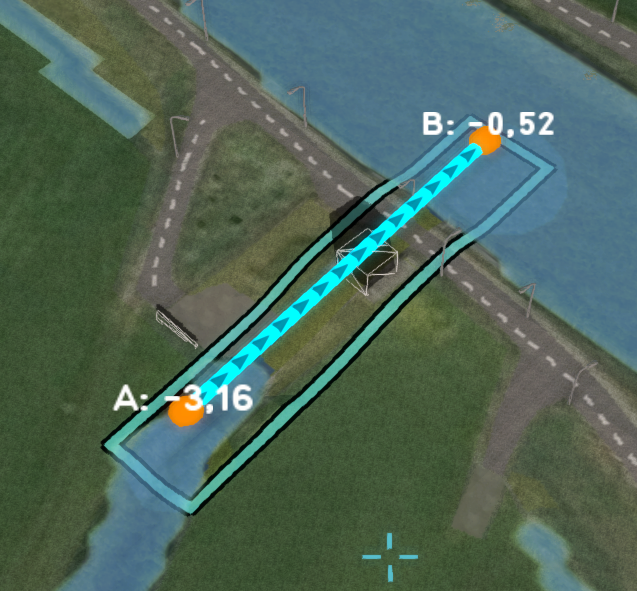 A pump consisting of one line area, with one entry point for the lower and one for the upper Water level areas. It only used a single cell to subtract water from, which might not be enough.
 -
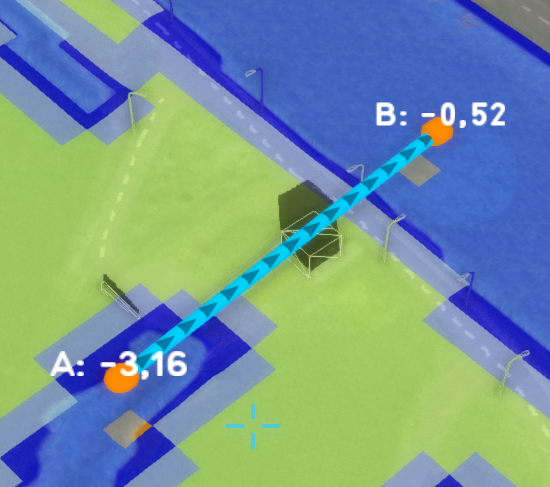 The base type overlay indicating that only one cell is used to subtract water from.
 -
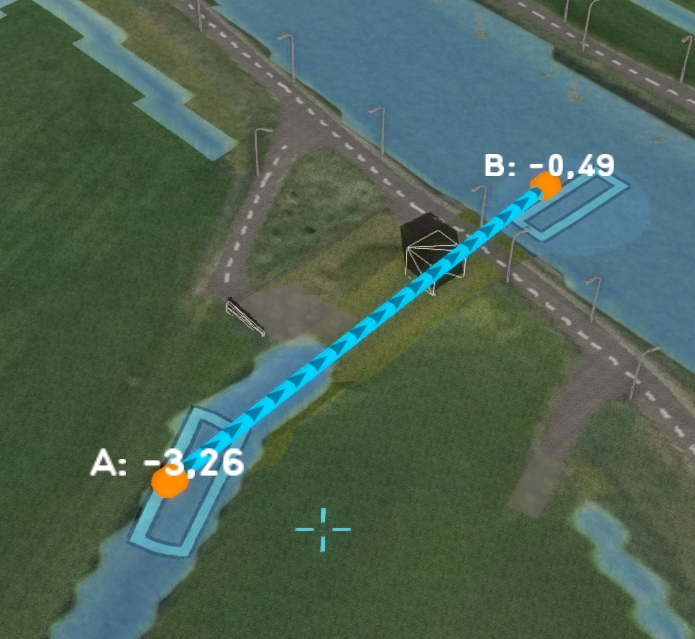 A pump consisting of two separate areas, one for the lower and one for the upper Water level areas. It uses a lower level threshold and requires multiple grid cells to subtract enough water. It is configured as a PUMP_AREA.
 -
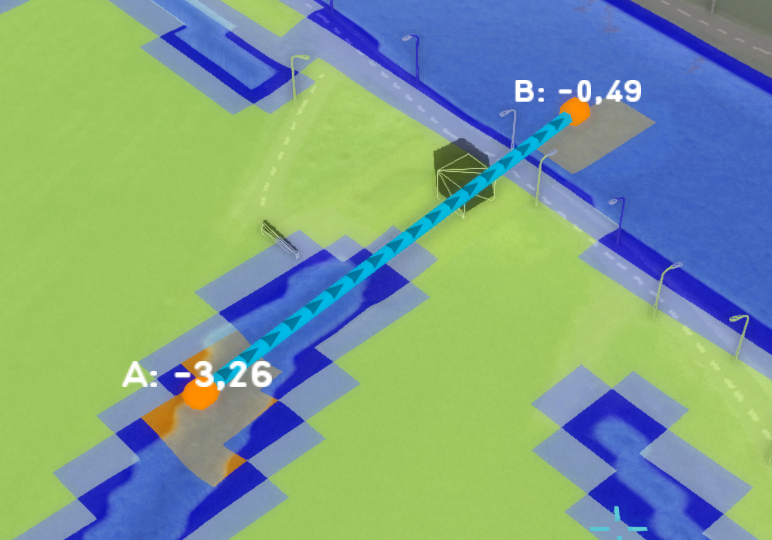 The base type overlay indicating that this pump now uses multiple cells to subtract water from.


Notes
- Selecting this option is useful when the PUMP_Q value is too large for a single cell.
- This requires the pump to consist of 2 discrete polygons. This can either be as a single section with 2 seperate polygons, or as 2 seperate sections with 1 polygon each.