How to create a Destination area: Difference between revisions
Jump to navigation
Jump to search
No edit summary |
No edit summary |
||
| Line 6: | Line 6: | ||
|Select the newly added area and select its attribute tab on the right side. Add on the bottom a new attribute, for example ROUTING_AREA, with a value of 1. Save the new attribute. The Area color will be used for the overlay, so pick an appropriate color here too. | |Select the newly added area and select its attribute tab on the right side. Add on the bottom a new attribute, for example ROUTING_AREA, with a value of 1. Save the new attribute. The Area color will be used for the overlay, so pick an appropriate color here too. | ||
|Open the Travel Distance Overlay and select the keys tab. Under the key [[Destination area (Travel Distance Overlay)|Destination Area]], select the attribute chosen attribute in step 3, in the example ROUTING_AREA. This ensures that the destination areas are identified using this attribute. | |Open the Travel Distance Overlay and select the keys tab. Under the key [[Destination area (Travel Distance Overlay)|Destination Area]], select the attribute chosen attribute in step 3, in the example ROUTING_AREA. This ensures that the destination areas are identified using this attribute. | ||
}} | |||
<gallery> | <gallery> | ||
Revision as of 14:10, 29 May 2026
Below an example with the Travel distance overlay based on a school and pedestrian traffic.
How to create a Destination area:
- Have a project loaded in the editor and decide the area of interest of the Travel Distance overlay, a school in our case.
- Add an area and select to Adjust the area. Draw in the area around the school. Important: Ensure that the area overlaps the adjacent roads. In our example the area overlaps with roads east, west and south of the school. Apply the selection.
- Select the newly added area and select its attribute tab on the right side. Add on the bottom a new attribute, for example ROUTING_AREA, with a value of 1. Save the new attribute. The Area color will be used for the overlay, so pick an appropriate color here too.
- Open the Travel Distance Overlay and select the keys tab. Under the key Destination Area, select the attribute chosen attribute in step 3, in the example ROUTING_AREA. This ensures that the destination areas are identified using this attribute.
-
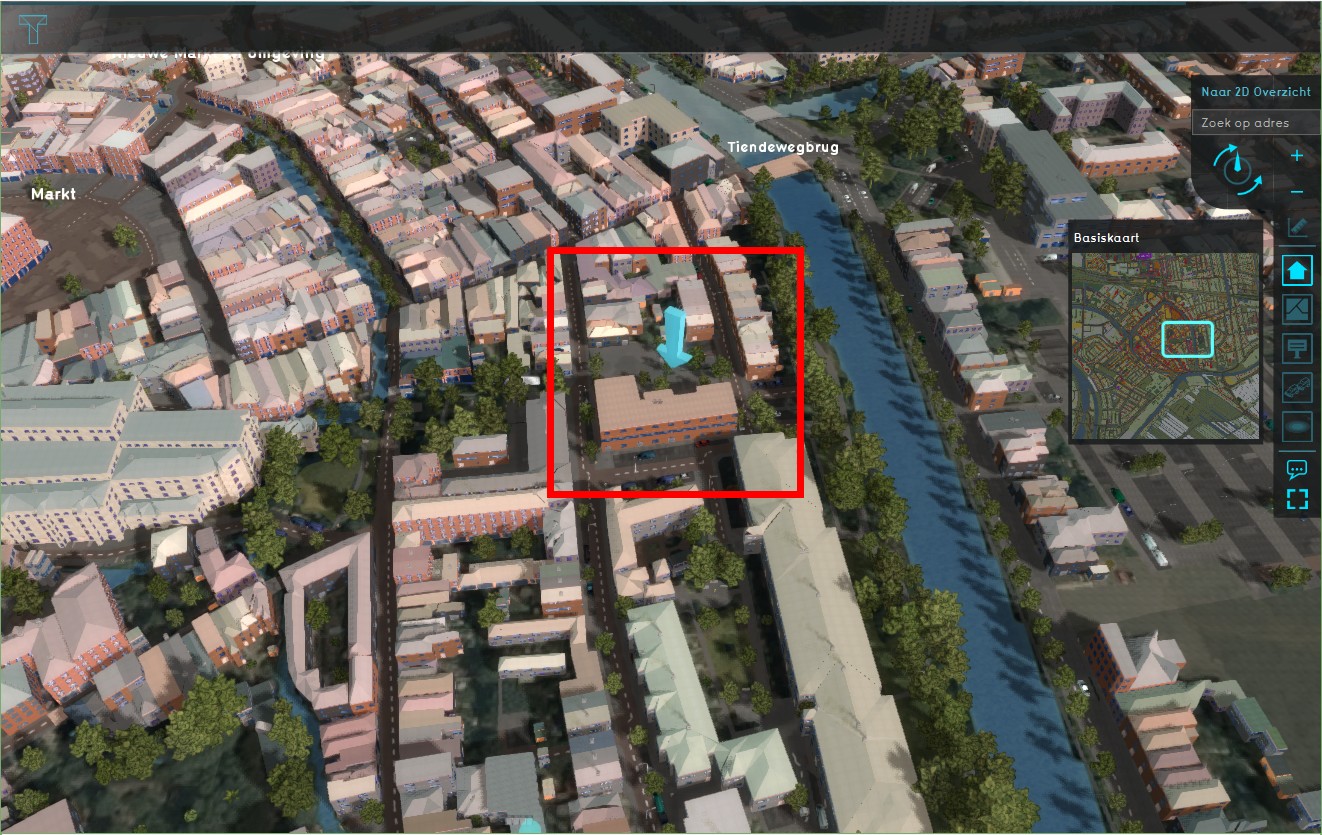 School selected as example, the blue arrow is added for clarity
 -
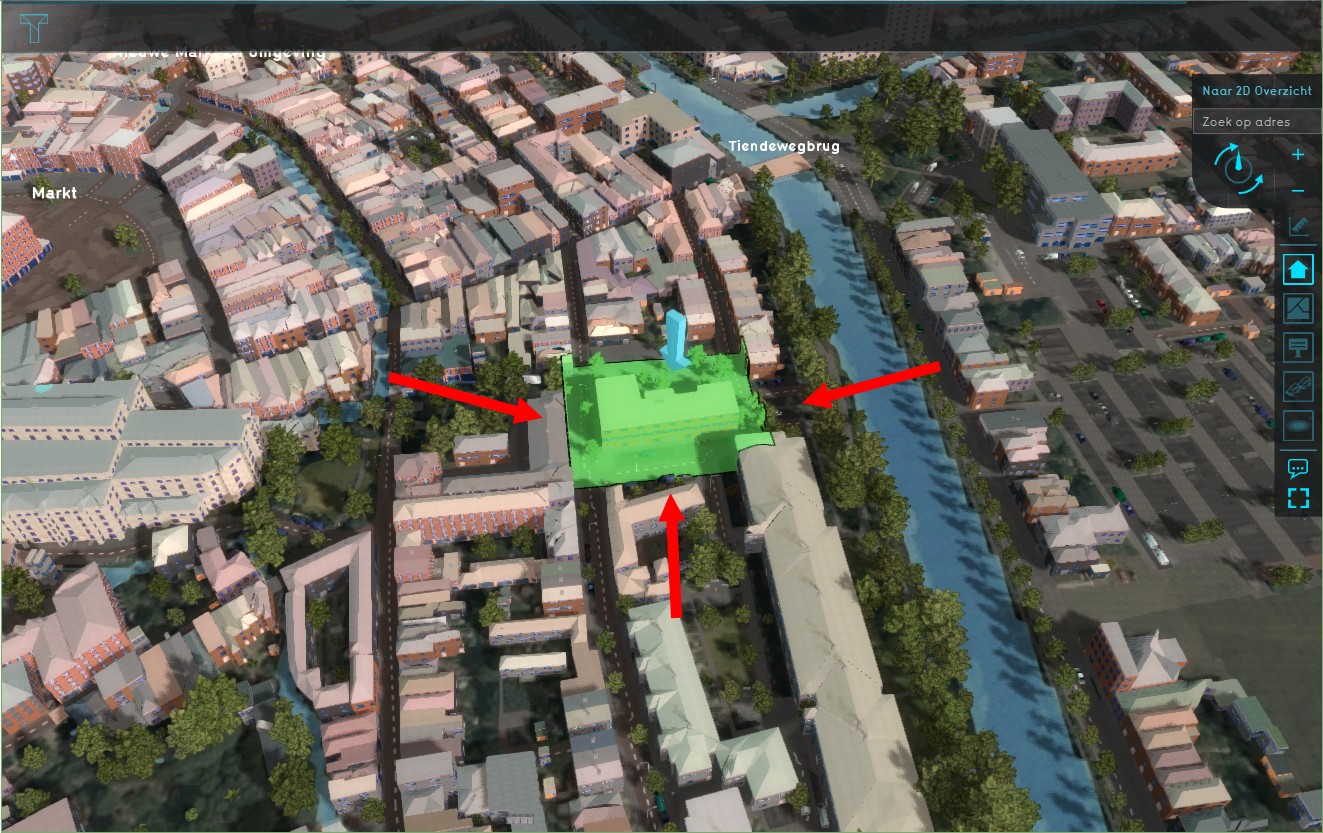 Please note that the area overlaps all adjacent roads east, west and south of the school
 -
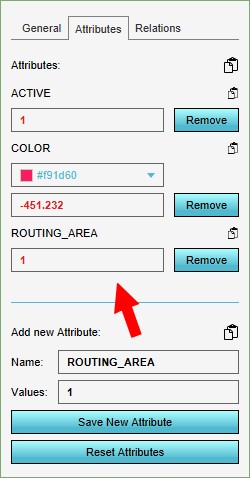
-
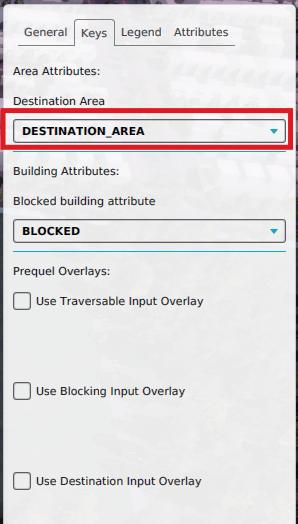


Notes
- In case a grid is used to identify traversable cells, make sure that the destination areas overlap a traversable cell.
See also
API Endpoints
- [[]]